Ureteric Stone, Renal Colic & Blocked Ureter Treatment, Ahmedabad

Ureteric Stone Treatment in Ahmedabad — Laser URS, Rapid Pain Relief, Day-Care Procedure

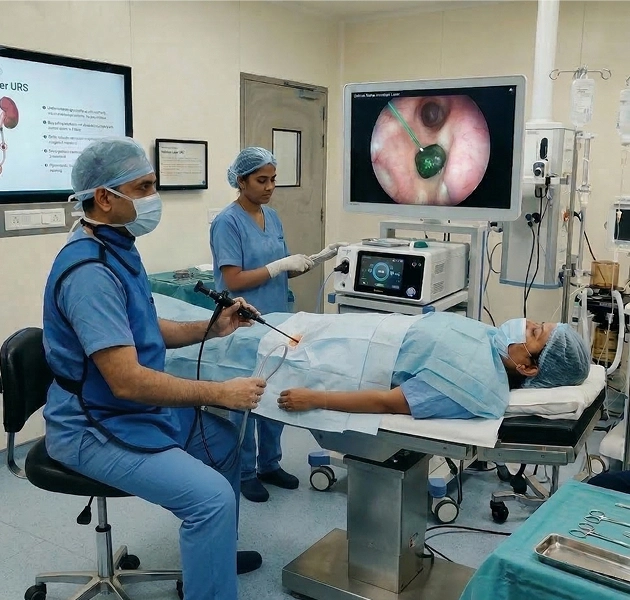
A stone stuck in the ureter causes some of the most severe pain imaginable. Ureteroscopy (URS) with Holmium laser fragmentation removes the stone in a day-care endoscopic procedure — no skin incision, go home the same day, with a 95% stone-free rate for patients seeking ureteric stone treatment in Ahmedabad.

100%
Stone-Free Rate
Day
Care Procedure
No
Skin Incision
24/7
Emergency
Holmium Laser Lithotripsy
Insurance Accepted
ESWL Also Available
Same-Day Emergency Care

Book a Stone Consultation

Tell us your symptoms — we respond within 2 hours
Severe colic + fever? Call now — may be infected obstruction

    Ureteric Stone Treatment at Trayam Hospital
    Understanding Ureteric Stones

    What is a Ureteric Stone? Stone Stuck in Ureter — Causes, Symptoms & Treatment in Ahmedabad

    A ureteric stone is a kidney stone that has passed out of the kidney and become lodged in the ureter — the narrow muscular tube connecting the kidney to the bladder. Because the ureter is only 3–4mm wide at its narrowest points, even small stones can cause complete obstruction and severe pain.

    The ureter contracts powerfully to try to push the stone downward, causing the characteristic severe loin-to-groin pain of renal colic — often described as the worst pain a person can experience, and one of the most common reasons patients seek ureteric stone treatment in Ahmedabad. Treatment options depend on stone size, location in the ureter, and whether there is associated infection or obstruction. Ureteroscopy (URS) with Holmium laser is the most effective single procedure, clearing 95% of ureteric stones in a single day-care session.

    • URS — ureteroscope passed through urethra to stone, Holmium laser fragmentation, no skin incision
    • Day-care procedure — most patients discharged same day, return to desk work within 2–3 days in Ahmedabad
    • ESWL available for suitable upper ureteric stones — no anaesthesia, outpatient shockwave treatment
    • Small stones under 5mm in lower ureter — medical expulsive therapy with tamsulosin offered first
    • Full metabolic evaluation after treatment — personalised prevention plan to stop stones returning
    Stone Location & Type

    Ureteric Stone Location — Upper, Mid & Lower Ureter Treatment Options in Ahmedabad

    The location of the stone in the ureter, its size and whether there is associated obstruction or infection determines which treatment is most appropriate for you.

    ESWL
    often suitable

    Upper Ureteric Stone Treatment in Ahmedabad — ESWL or Flexible URS

    Stone lodged in the upper third of the ureter close to the kidney. ESWL (shockwave lithotripsy) is effective for smaller stones here. URS flexible ureteroscopy used for larger stones or ESWL failures. Can cause significant flank pain and hydronephrosis.

    ESWL / Flex URS
    URS
    preferred

    Mid Ureteric Stone Treatment in Ahmedabad — Semi-Rigid URS Gold Standard

    Stone in the middle third of the ureter — most challenging location. URS with semi-rigid or flexible ureteroscope and Holmium laser is the treatment of choice. ESWL less effective here due to overlying bowel. High stone-free rate with URS in a single

    Semi-rigid URS
    Best
    for spontaneous pass

    Lower Ureteric Stone Treatment — Medical Expulsion or URS in Ahmedabad

    Stone in the lower third of the ureter close to the bladder. Small stones under 5mm here have 70–80% spontaneous passage rate with tamsulosin. ESWL effective for stones up to 10mm. URS used for larger stones or failed medical expulsion. Least likely to cause hydronephrosis.

    Medical Expulsion First
    URGENT
    emergency

    Infected Blocked Ureter (Pyonephrosis) — Urological Emergency, 24/7 Drainage at Trayam

    Stone blocking the ureter with superimposed kidney infection (pyonephrosis) — a urological emergency. Fever, rigors and loin pain with a stone on scan. Requires emergency drainage (JJ stent or nephrostomy tube) followed by elective URS once infection is controlled.

    Urological Emergency
    Recognise Your Symptoms

    Ureteric Stone & Renal Colic Symptoms — From Severe Pain to Emergency Warning Signs

    Ureteric stone symptoms range from excruciating renal colic to subtle blood in urine. Know which symptoms need emergency care and which allow time for planned treatment.
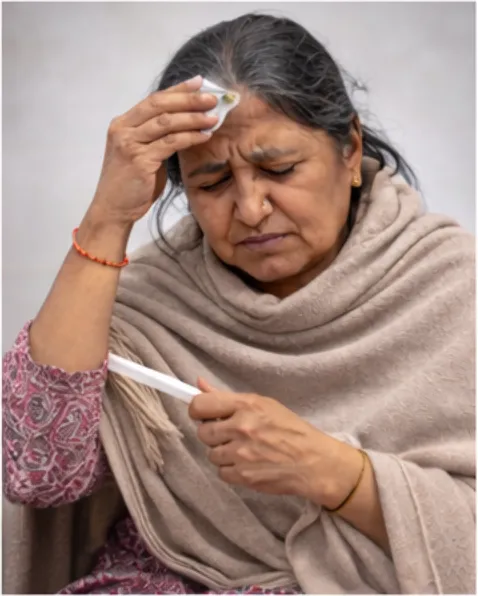
    Fever with Renal Colic — Infected Obstructed Ureter, Call Emergency Now

    Fever with Renal Colic — Infected Obstructed Ureter, Call Emergency Now

    Stone + fever = infected obstructed kidney. Urological emergency — call immediately, do not wait for morning.
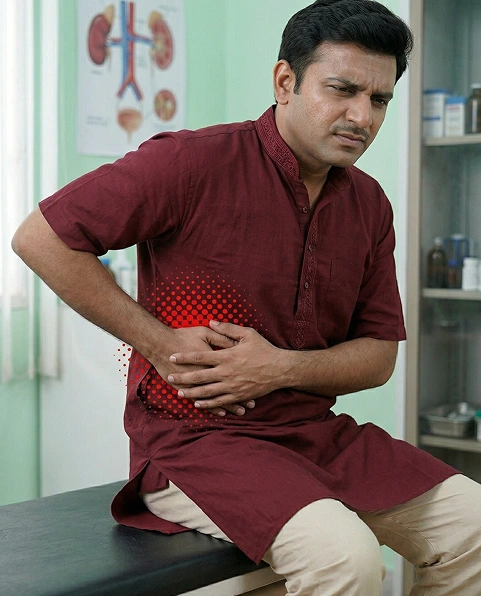
    Renal Colic — Severe Loin-to-Groin Pain from Stone Stuck in Ureter

    Renal Colic — Severe Loin-to-Groin Pain from Stone Stuck in Ureter

    Sudden, severe loin-to-groin pain in waves — often described as the worst pain imaginable. Cannot find a comfortable position.
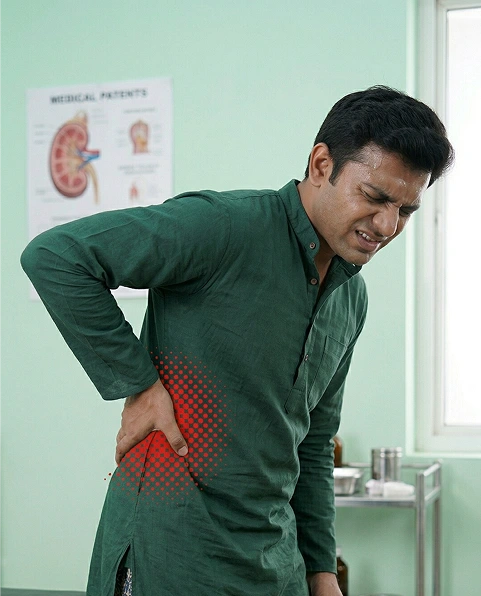
    Loin or Flank Pain — Kidney Distending from Blocked Ureter

    Loin or Flank Pain — Kidney Distending from Blocked Ureter

    Constant or intermittent pain in the side or back below the ribs — from the kidney being obstructed and distending with urine.
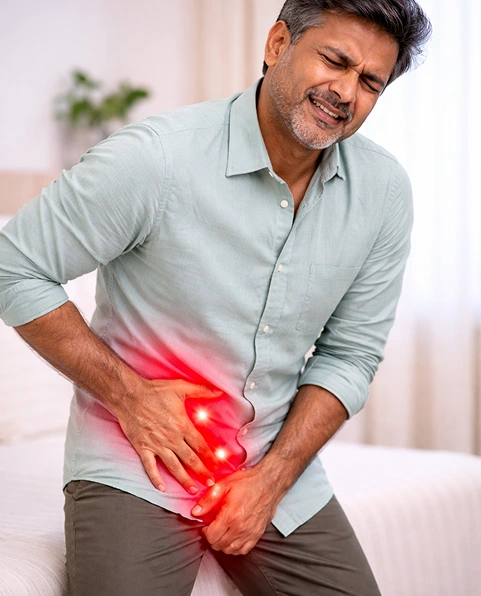
    Pain Radiating from Loin to Groin — Classic Ureteric Stone Colic Pattern

    Pain Radiating from Loin to Groin — Classic Ureteric Stone Colic Pattern

    Pain moving from loin down to the groin, inner thigh or genitals as the stone descends the ureter — classic ureteric colic pattern.
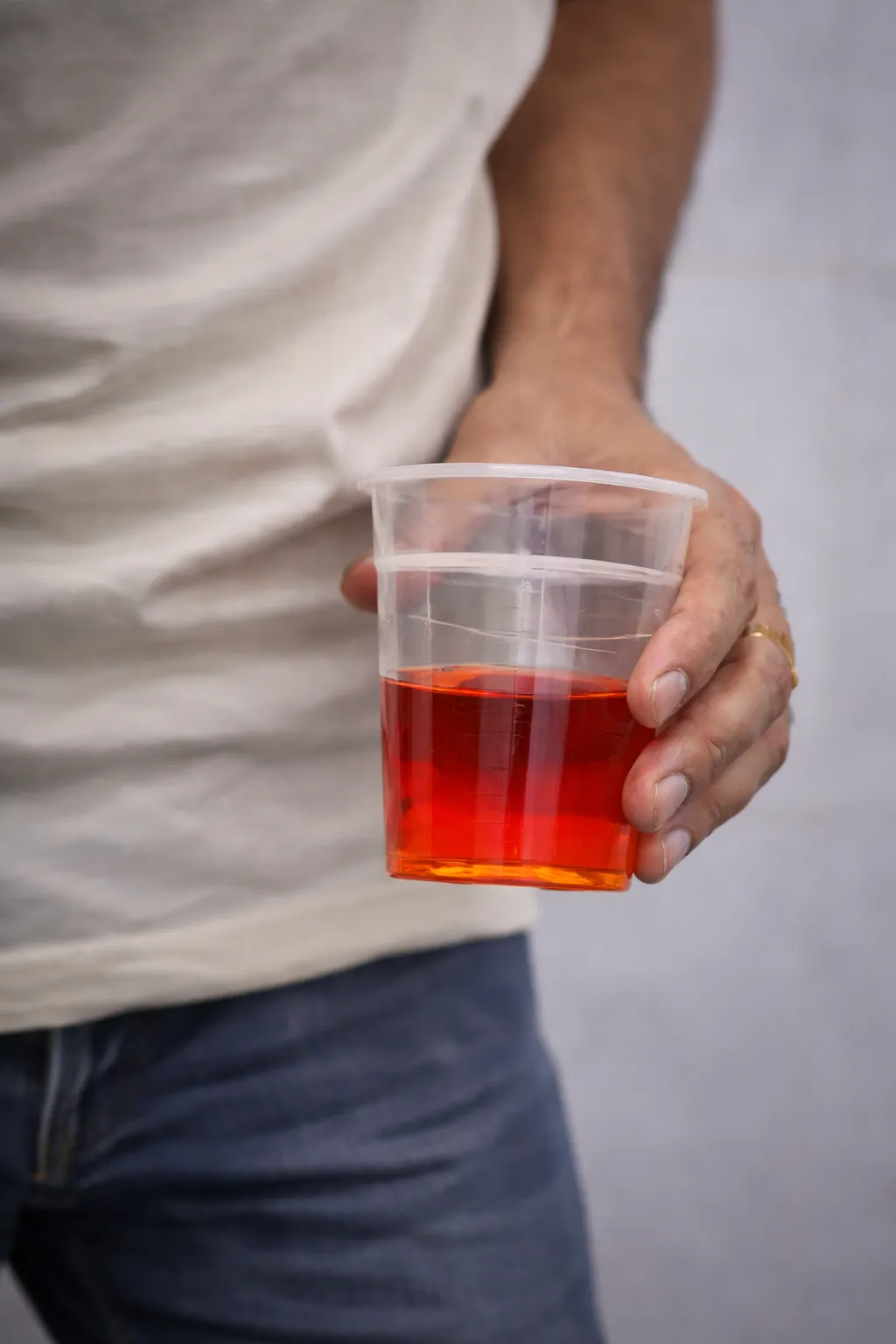
    Blood in Urine (Haematuria) — Stone Scraping Ureter Wall, Present in 90% of Cases

    Blood in Urine (Haematuria) — Stone Scraping Ureter Wall, Present in 90% of Cases

    Pink, red or brown urine — the stone scrapes the ureter wall as it moves. Present in 90% of ureteric stone cases.
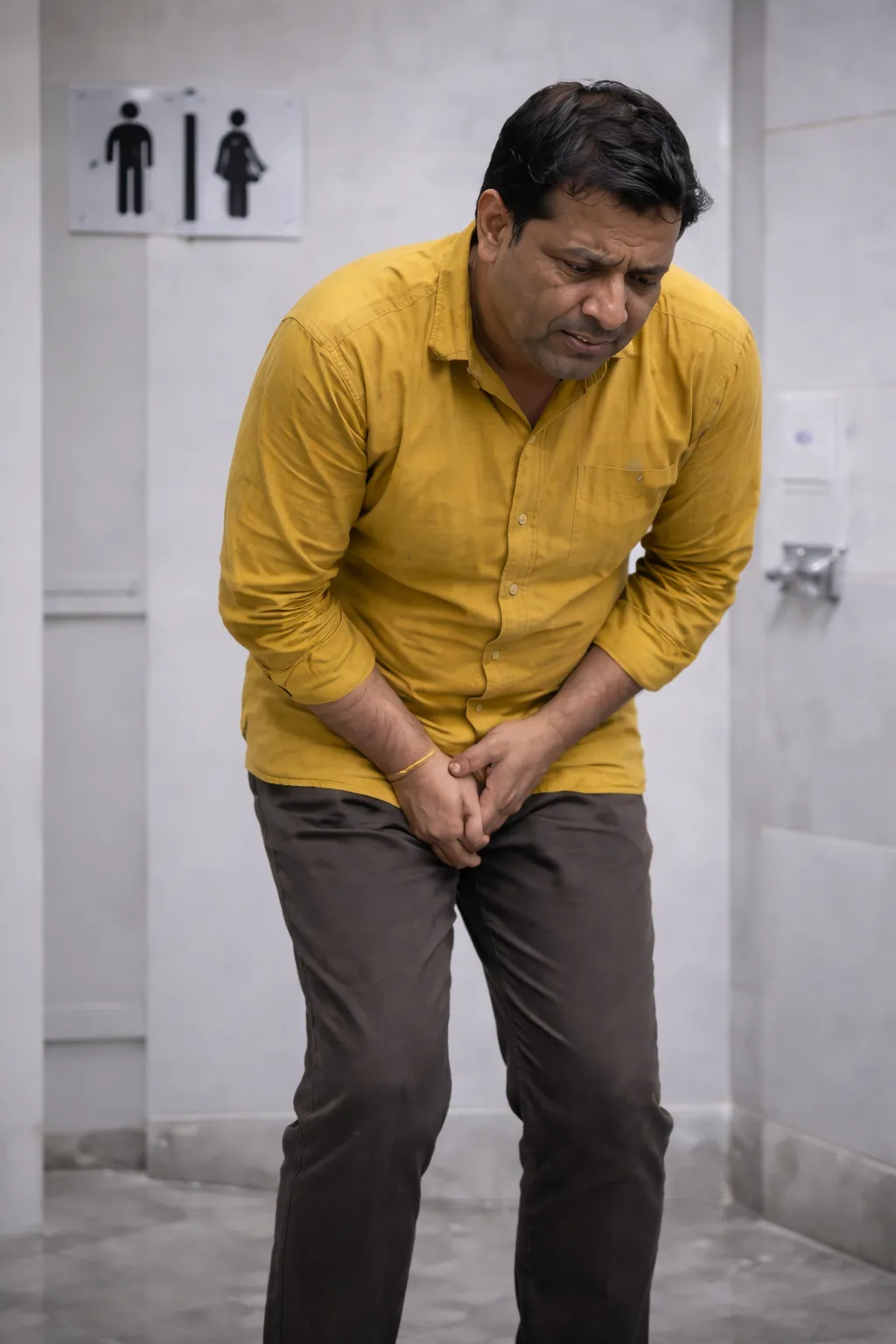
    Urinary Urgency & Frequency — Stone Near Bladder Junction

    Urinary Urgency & Frequency — Stone Near Bladder Junction

    Frequent urge to urinate and urgency — especially when the stone is near the bladder in the lower ureter, irritating the bladder.
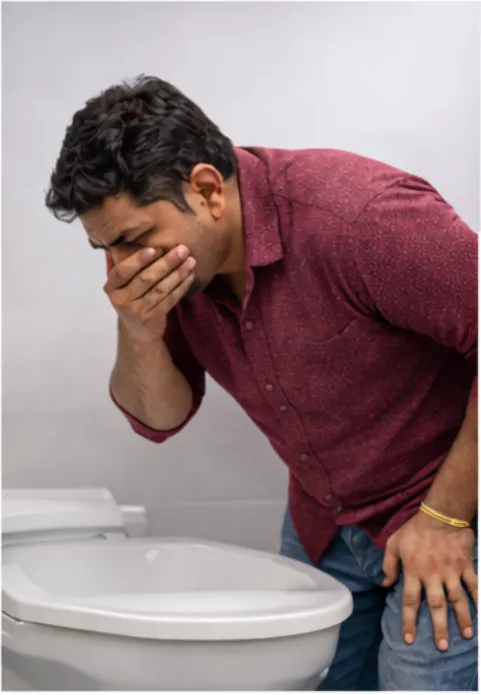
    Nausea & Vomiting with Colic — IV Analgesia Often Required

    Nausea & Vomiting with Colic — IV Analgesia Often Required

    Severe pain of renal colic triggers nausea and vomiting — often preventing oral pain medication, requiring IV or suppository analgesia.
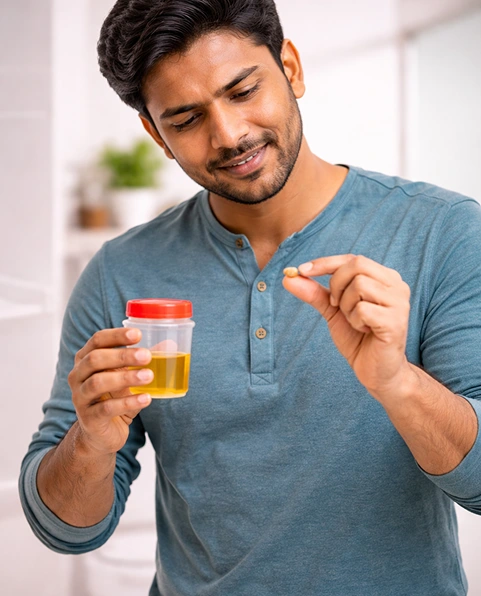
    Stone Passed in Urine — Sudden Relief Confirms Spontaneous Passage

    Stone Passed in Urine — Sudden Relief Confirms Spontaneous Passage

    Sudden relief of colic followed by passing a small gritty stone in urine — confirmation of spontaneous passage. Strain urine to collect the stone for analysis.

    Treatment Pathways

    Ureteric Stone Treatment Options in Ahmedabad — Medical, Laser URS & Emergency Stenting

    Not every ureteric stone needs immediate surgery. Treatment depends on stone size, ureter location, degree of obstruction and whether there is associated infection. We always recommend the least invasive effective option first.

    Medical Expulsive Therapy (MET) — Tamsulosin for Small Ureteric Stones to Pass Naturally

    Tamsulosin + pain relief — small stones pass naturally

    For stones under 5–6mm in the lower ureter, tamsulosin (an alpha-blocker) relaxes the ureteric muscle and significantly increases spontaneous passage rate to 70–80%. Adequate analgesia (diclofenac, tramadol) and hydration are essential. Strain urine to collect the stone for analysis. Weekly monitoring to confirm passage or decide on escalation to URS.

    No Procedure 7–14 Days
    Best for: Stones <6mm, lower ureter, no obstruction or infection, tolerable pain

    URS Laser Surgery in Ahmedabad — 95% Stone-Free, Day-Care, No Incision

    Gold standard — 95% stone-free, day care, no incision

    A thin ureteroscope is passed through the urethra and up the ureter to the stone under general or spinal anaesthesia. A Holmium:YAG laser fragments the stone into dust or small passable pieces. A JJ stent is placed for 2–4 weeks to keep the ureter open while it heals. Day-care procedure — home the same day. 95% stone-free rate in a single session for ureteric stones of all sizes.

    No Incision Day Care 95% Stone-Free
    Best for: All ureteric stones — especially >6mm, mid ureter, failed MET, obstruction

    ESWL for Ureteric Stone in Ahmedabad — Non-Invasive Shockwave Treatment

    Non-invasive, no anaesthesia — selected stones

    Extracorporeal Shockwave Lithotripsy uses focused shockwaves from outside the body to fragment the stone — no anaesthesia, no entry into the body, outpatient procedure. Most effective for stones up to 10mm in the upper ureter. Lower stone-free rate than URS (60–70%), may need repeat sessions, and fragments still need to pass. Not suitable for mid/lower ureteric stones or stones with obstruction.

    No Anaesthesia Outpatient
    Best for: Upper ureteric stones <10mm, no obstruction, suitable stone density on CT

    Emergency JJ Stent Placement in Ahmedabad — Infected Blocked Ureter Drainage

    Urgent drainage for infected obstructed kidney

    Fever + stone with obstruction = pyonephrosis (infected obstructed kidney) — a urological emergency. Urgent drainage with a JJ stent (cystoscopic, under anaesthesia) or percutaneous nephrostomy tube decompresses the obstructed kidney and allows IV antibiotics to work. Definitive URS is performed 4–6 weeks later once infection is fully cleared and the patient is stable.

    Emergency 24/7 Kidney Salvage
    Best for: Stone + fever + obstruction — emergency drainage, definitive treatment later

    Ureteric Stone Analysis & Metabolic Evaluation — Prevent the Next Stone

    Prevent the next stone — find the metabolic cause

    Stone composition analysis (calcium oxalate, uric acid, struvite, cystine) guides prevention. Metabolic evaluation includes 24-hour urine collection for calcium, oxalate, uric acid and citrate, blood tests for calcium and uric acid, and dietary assessment. Based on results — personalised dietary advice, high fluid targets and medication where indicated to reduce recurrence from 50% to under 15%.

    Prevent Recurrence Personalised Plan
    Best for: All stone formers — especially recurrent stones or bilateral disease

    CT KUB Scan in Ahmedabad — Gold Standard Ureteric Stone Mapping Before Treatment

    Size, location, density, obstruction — all in one scan

    A non-contrast CT KUB (kidneys, ureters, bladder) is the gold-standard investigation for ureteric stones — identifies stone size, exact location, Hounsfield unit density (predicts ESWL response), degree of hydronephrosis and any structural abnormality. Completed before any treatment decision. Far superior to plain X-ray or ultrasound for ureteric stones.

    15 Minutes Gold Standard
    Best for: Every patient before deciding on MET, URS or ESWL — complete stone mapping
    Why Trayam Urology

    Why Choose Trayam for Ureteric Stone Treatment in Ahmedabad?

    Our ureteric stone programme combines precise CT-based planning, Holmium laser URS technology, 24/7 emergency cover and a genuine metabolic prevention plan.

    100%
    Stone-Free Rate (URS)
    Day
    Care Procedure
    Laser
    Holmium URS
    24/7
    Emergency

    Holmium Laser URS — 95% Stone-Free Rate for Ureteric Stones at All Levels

    We use Holmium:YAG laser ureteroscopy — the most effective technology for ureteric stone fragmentation. 95% stone-free rate in a single session for stones at any level of the ureter, any size.

    Day-Care URS — Home Same Evening, Back to Work in 2–3 Days

    URS is performed as a day-care procedure under spinal or general anaesthesia. Most patients are discharged the same evening and return to desk work within 2–3 days — no prolonged hospital stay.

    24/7 Renal Colic & Emergency Ureteric Stone Cover in Ahmedabad

    Renal colic and infected ureteric obstruction do not wait for office hours. Emergency assessment, IV analgesia, imaging and urgent stenting or nephrostomy is available around the clock at Trayam.

    CT KUB-Based Stone Mapping — Precise Treatment Plan for Every Ureteric Stone

    Every patient has a CT KUB before treatment planning. Stone size, density, location and degree of hydronephrosis are mapped precisely — ensuring the right procedure is chosen and reducing the chance of a second procedure.

    ESWL & URS Both Available — Right Procedure Matched to Your Stone

    Small stones with good passage probability receive medical expulsive therapy with tamsulosin first. We only proceed to URS when the stone is unlikely to pass, causing obstruction, or associated with infection.

    Metabolic Stone Prevention Plan — Reduce Recurrence from 50% to Under 15%

    Every treated stone patient receives metabolic evaluation and stone composition analysis — with a personalised dietary and medication plan that reduces recurrence from 50% to under 15%. We treat the stone and its cause.

    Expert Care

    Meet Dr. Renish Patel — Ureteric Stone & Renal Colic Specialist in Ahmedabad

    Dr. Renish Patel — Trayam Hospital
    MCh Urology URS Expert Laser Lithotripsy ESWL Trained 10+ Yrs Exp.

    Dr. Renish Patel

    Senior Consultant Urologist — Urinary Stone Surgery & Endourology Specialist, Trayam Hospital

    Dr. Renish Patel has performed over 3,000 ureteroscopy procedures — including complex impacted stones, solitary kidney cases and stones in pregnancy. The philosophy is straightforward: offer medical expulsive therapy where appropriate, use Holmium laser URS when intervention is needed, and always complete metabolic evaluation so the next stone never forms.

    • MCh Urology
    • Advanced Endourology & Laser Lithotripsy Fellowship
    • ESWL Operator Certification
    • Published outcomes in flexible URS for complex ureteric stones
    • Speaker — Urological Society of India Annual Conferences
    Common Problems in Stone Treatment

    Stone Treated Without Investigating Why It Formed?

    Ureteric stone treatment focuses too often on the acute stone and too rarely on preventing the next one. Half of stone formers will have another stone within 10 years without metabolic evaluation — yet this investigation is rarely performed after stone passage or URS.

    • Stone treated, no metabolic evaluation performed — without stone composition analysis and 24-hour urine metabolic testing, the cause of stone formation remains unknown. Without knowing the cause, the next stone cannot be prevented. This evaluation should be routine after every first or recurrent stone.
    • Fever + stone on scan managed with antibiotics alone, without drainage — an infected obstructed kidney (pyonephrosis) requires urgent decompression, not just antibiotics. Antibiotics cannot penetrate adequately into an obstructed pus-filled kidney. Drainage is the life-saving step — antibiotics alone are insufficient.
    • URS performed without a CT KUB — only X-ray or ultrasound used for planning — CT KUB is the gold standard for stone mapping. Plain X-ray misses up to 20% of stones and cannot determine stone density or degree of obstruction. Planning URS without a CT risks inadequate preparation and second procedures.
    • Medical expulsive therapy used for weeks without monitoring — MET with tamsulosin is appropriate for small lower ureteric stones, but requires weekly monitoring. A stone that is not passing after 2–4 weeks risks silent kidney damage from sustained obstruction. MET without monitoring is not safe.
    The Trayam Stone Promise CT mapping before every procedure. Metabolic evaluation after every stone. Emergency cover around the clock. Prevent the next stone — always.

    CT KUB Before Every Procedure

    Every patient receives a non-contrast CT KUB before treatment planning. Stone size, density, location and obstruction are mapped precisely — ensuring the right procedure first time.

    Holmium Laser URS — 95% Stone-Free in One Session

    When intervention is needed, we use Holmium:YAG laser ureteroscopy — the most effective technology available, achieving 95% stone-free rate in a single day-care procedure.

    Metabolic Evaluation — Prevent the Next Stone

    Every stone patient receives stone composition analysis and metabolic evaluation. A personalised prevention plan reduces recurrence from 50% to under 15%. We treat the stone and its cause.

    Bring your imaging if available — or we start with a CT KUB. If you’re looking for a ureter stone surgeon in Ahmedabad, we’ll map the stone, give rapid pain relief and plan the right treatment.

    Confidential  ·  No Obligation  ·  Reply in 2 Hours

    After URS — What to Expect

    Recovery After URS & Stone Prevention

    URS recovery is straightforward — most patients are home the same day. Here is what to expect during recovery, and the evidence-based steps to prevent stones from forming again.


    Day of Procedure — Home Same Day

    URS takes 30–60 minutes under anaesthesia. Recovery room for 2–3 hours, then discharged once passing urine comfortably. A JJ stent is usually in place — mild back ache and urinary frequency are normal with the stent.

    🏥 Home same evening

    Days 1–7 — Stent Symptoms

    With a JJ stent in place: mild loin ache, urinary frequency and intermittent pink urine are completely normal and expected. Drink 2–3 litres per day. Avoid heavy lifting. Desk work resumes at 2–3 days. Prescribed tamsulosin helps reduce stent symptoms.

    💧 High fluid intake — 2.5L/day

    Weeks 2–4 — Stent Removal

    The JJ stent is removed in a brief outpatient procedure under local anaesthesia — takes 5 minutes. Stent symptoms resolve within hours of removal. KUB X-ray or ultrasound at 6 weeks confirms the ureter is clear and stone-free.

    ✅ Stent removal = immediate relief

    Prevention — 2.5 Litres Daily for Life

    The single most effective stone prevention measure is adequate hydration — 2.5 litres per day to keep urine dilute and pale. Concentrated urine is the environment in which crystals form and grow into stones. This alone reduces recurrence risk by 40–50%.

    💧 Pale yellow urine = low stone risk

    Dietary Modifications by Stone Type

    Calcium oxalate stones — reduce spinach, nuts, chocolate and excessive vitamin C. Uric acid stones — reduce red meat, organ meat and alcohol; alkalinise urine. Struvite stones — treat underlying infection. Stone composition analysis from your specimen guides specific dietary advice.

    🥗 Stone type determines diet plan

    Metabolic Evaluation — Find the Root Cause

    24-hour urine collection for calcium, oxalate, uric acid and citrate, blood calcium and uric acid, and stone composition analysis identifies the metabolic driver of your stones. Based on results — medication such as potassium citrate, thiazide diuretics or allopurinol may reduce recurrence dramatically in high-risk formers.

    🔬 Reduces recurrence from 50% to <15%
    Patient Stories

    What Our Stone Patients Say

    Trayam Hospital place picture
    5.0
    Based on 27 reviews
    powered by Google
    Jatin Patel profile picture
    Jatin Patel
    13:41 17 Apr 26


    I had severe back pain for years and was scared of surgery. Dr. Parth Patel at Trayam Hospital explained everything very calmly. My spine surgery went smoothly, recovery was fast, and I can walk pain-free now. Thank you sir for giving me my normal life back.
    Hitesh Vaghela profile picture
    Hitesh Vaghela
    05:18 10 Mar 26
    I have severe neck pain and difficulty in walking and imbalance with radicular pain
    Dr parth have operated cervical spine and I m very thankful to him.best spine surgeon
    Sudha Patel profile picture
    Sudha Patel
    14:16 02 Feb 26
    Really good service & good support.
    MUKESH PATEL profile picture
    MUKESH PATEL
    14:11 02 Feb 26
    Best orthopeadic and urology hospital
    Staff is polite and doctor provide best result.
    Umang Patel profile picture
    Umang Patel
    13:29 07 Jan 26
    Very nice hospital and surgery successfully completed also Dr. And staff very helpful.
    Ketan Darji profile picture
    Ketan Darji
    08:11 13 Dec 25
    I underwent total knee replacement at Trayam Hospital. From pre-surgery counselling to physiotherapy, everything was handled with full attention. Dr. Parth Patel’s team is excellent. I can walk comfortably now after many years.
    Raju Bhai profile picture
    Raju Bhai
    06:51 13 Dec 25
    I had slipped disc problem and was afraid of operation. Dr. Parth Patel did endoscopic spine surgery and it was a life changer. The hospital rooms are clean and staff is always smiling. Thank you Trayam Hospital!
    Sagar Kumar profile picture
    Sagar Kumar
    05:30 13 Dec 25
    Trayam Hospital is truly patient-friendly. Both Dr. Parth Patel and Dr. Renish Patel are very humble and professional. Staff is polite, rooms are neat, and treatment quality is top-notch. Best orthopaedic and urology hospital in Ahmedabad. 🙏
    Aastha Patel profile picture
    Aastha Patel
    06:53 16 Nov 25
    Trauma hospital exceeded my expectations! Dr. Parth's care and diagnosis really helped ease my foot pain, which I had been dealing with for a while. Appreciate the spot-on treatment and the team's support. Would definitely recommend
    Common Questions

    FAQs — Ureteric Stone Treatment, Laser URS Cost, Renal Colic & JJ Stent in Ahmedabad

    A bladder infection (cystitis) causes burning on urination, frequency and cloudy urine — but no fever. A kidney infection (pyelonephritis) causes high fever, rigors, loin pain and vomiting in addition to urinary symptoms. Any UTI with fever must be assessed urgently — it may be a kidney infection requiring IV antibiotics and investigation for obstruction.

    Recurrent UTI (3 or more per year) almost always has an underlying cause. In women: incomplete bladder emptying, hormonal changes after menopause, anatomical factors or post-coital pattern. In men: prostate enlargement causing residual urine. In both: antibiotic resistance from incomplete previous treatment. We investigate the cause before treating — not just repeat antibiotics.

    For a first-time uncomplicated UTI in a young woman, a short empirical course may be reasonable. But for any recurrent, complicated, upper tract, male or catheter-associated UTI — empirical treatment without culture risks using the wrong antibiotic, prolonging symptoms and driving antibiotic resistance. We always culture before treating these cases.

    Uncomplicated lower UTI (cystitis) typically resolves within 3–7 days on the correct targeted antibiotic. Symptoms of burning and frequency usually start improving within 24–48 hours of correct therapy. Upper UTI (pyelonephritis) requires 10–14 days. If symptoms persist beyond 48–72 hours, a urine culture re-check is essential to confirm the right antibiotic is being used.

    Yes — repeated upper urinary tract infections (pyelonephritis) or untreated complicated UTI can cause renal scarring and progressive kidney damage. An infected obstructed kidney that is not drained promptly is particularly dangerous. This is why prompt, culture-guided treatment of upper UTI is critical, and why recurrent UTI must be investigated for underlying causes.

    Recurrent UTI evaluation includes: urine culture and sensitivity for the current episode, renal and bladder ultrasound, post-void residual measurement, uroflowmetry if obstruction is suspected, and blood tests including renal function. In postmenopausal women, hormonal assessment. In men, prostate evaluation. In children, VUR assessment.

    Some evidence supports modest benefits of cranberry products and D-mannose for UTI prevention in women with recurrent uncomplicated UTI — they reduce bacterial adhesion to bladder wall cells. They are not a substitute for investigation and treatment of recurrent UTI but are safe supplements with no resistance risk. We provide evidence-based guidance on both as part of prevention planning.

    UTI in men is less common than in women and is almost always considered a complicated UTI — warranting full investigation for a structural or obstructive cause such as BPH, urethral stricture or kidney stone. A UTI in a man should never be treated as a simple uncomplicated infection without proper evaluation including a prostate assessment and renal ultrasound.

    UTI treatment requiring hospitalisation — such as IV antibiotic treatment for pyelonephritis or emergency drainage of an infected obstructed kidney — is covered by all Indian health insurance policies. Trayam Hospital in Ahmedabad is empanelled with all major insurers. Outpatient UTI consultation and oral antibiotics may be claimed under OPD benefit depending on your policy terms.

    Effective UTI prevention: adequate hydration (2.5 litres per day), urinating promptly when the urge arises, post-coital voiding within 30 minutes for women, wiping front to back, avoiding harsh soaps near the urethra, and — for postmenopausal women — topical vaginal oestrogen if appropriate. We provide a personalised prevention plan for every recurrent UTI patient.

    Ureteric Stone Causing Colic? Get Rapid Relief & a Prevention Plan.

    Bring your CT or ultrasound if you have one — or we start with a CT KUB. Rapid pain relief, day-care URS, metabolic evaluation and a prevention plan that actually works.

    Chat on WhatsApp