
Introduction
Knee pain is one of the most common orthopaedic issues affecting people across all age groups. From young athletes dealing with sports injuries to older adults experiencing joint degeneration, knee problems can significantly impact mobility and quality of life.
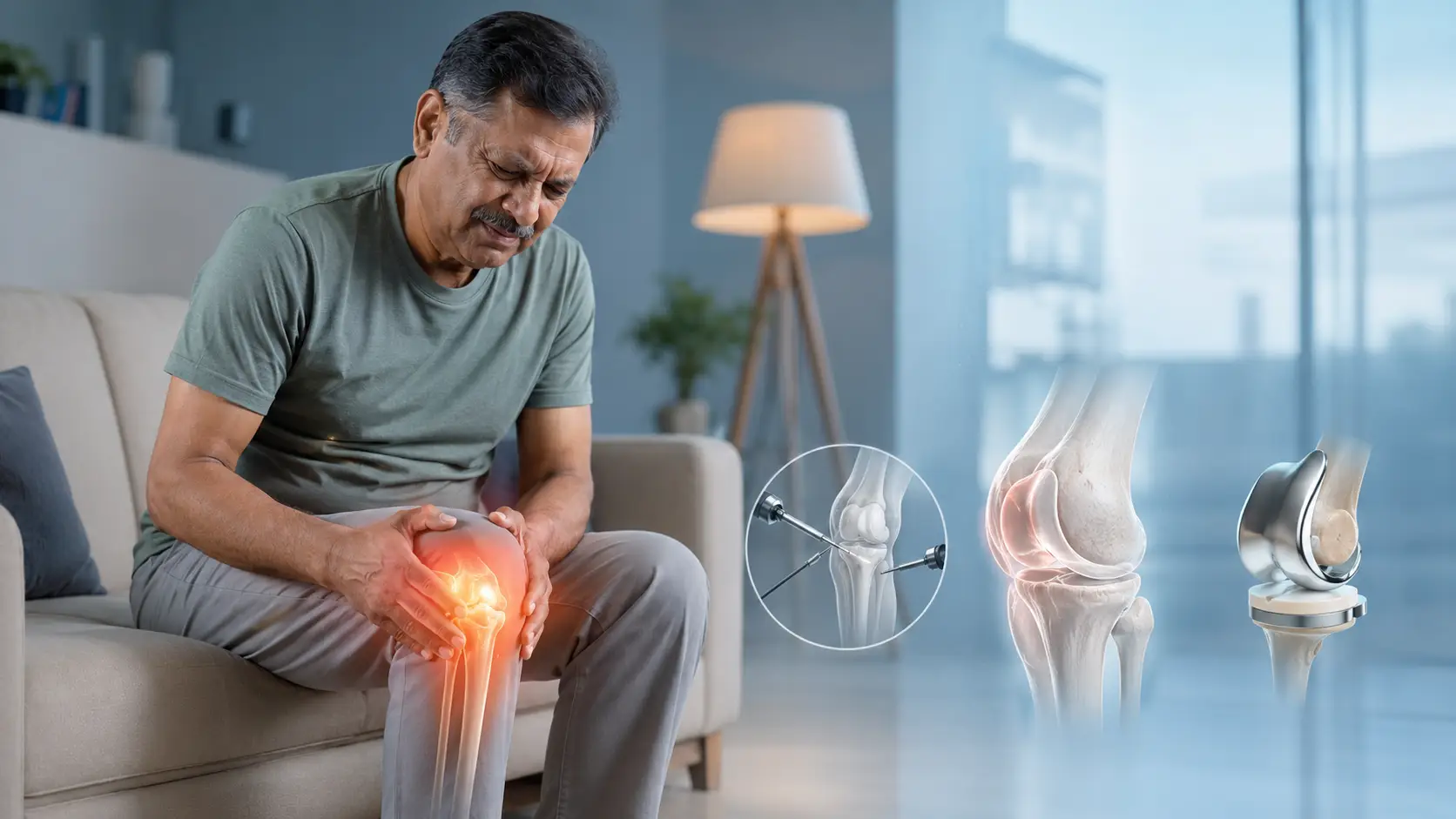
When conservative treatments such as medication, physiotherapy, and lifestyle changes fail to provide relief, doctors often recommend surgical intervention. Two of the most commonly suggested procedures are knee arthroscopy and knee replacement surgery.
While both procedures aim to reduce pain and improve function, they are fundamentally different in terms of purpose, complexity, recovery, and long-term outcomes.
Understanding the difference between knee replacement and knee arthroscopy is essential to making an informed decision about your treatment. This guide will help you clearly understand both procedures and determine which option may be right for you.
Understanding Knee Joint Problems
Before comparing the procedures, it is important to understand how knee problems develop.
The knee is one of the largest and most complex joints in the body. It consists of bones, cartilage, ligaments, and tendons that work together to allow smooth movement.
Common causes of knee pain include:
- Cartilage damage
- Ligament injuries (ACL, PCL tears)
- Meniscus tears
- Osteoarthritis
- Rheumatoid arthritis
- Sports injuries
- Age-related wear and tear
Depending on the severity and type of damage, the treatment approach varies significantly.
What is Knee Arthroscopy?
Knee arthroscopy is a minimally invasive surgical procedure used to diagnose and treat problems inside the knee joint.
During the procedure:
- A small camera called an arthroscope is inserted through tiny incisions
- The surgeon views the inside of the joint on a screen
- Special instruments are used to repair or remove damaged tissue
This technique allows precise treatment with minimal damage to surrounding tissues.
Conditions Treated with Knee Arthroscopy
Knee arthroscopy is typically recommended for mild to moderate knee problems, including:
- Meniscus tears
- Ligament injuries such as ACL or PCL tears
- Cartilage damage
- Loose bone or cartilage fragments
- Synovial inflammation (joint lining inflammation)
- Early-stage arthritis
It is especially useful for patients who want to preserve their natural joint and avoid major surgery.
Advantages of Knee Arthroscopy
Minimally Invasive Procedure
Small incisions result in less tissue damage and minimal scarring.
Faster Recovery
Most patients recover within 2 to 6 weeks, depending on the condition.
Less Pain
Post-operative pain is significantly lower compared to major surgery.
Short Hospital Stay
Many arthroscopic procedures are performed as day-care surgeries.
Early Return to Activities
Patients can resume daily activities and work much sooner.
Limitations of Knee Arthroscopy
While arthroscopy has many benefits, it is not suitable for all cases.
- It cannot treat advanced arthritis
- It may not provide long-term relief in severe joint damage
- Some conditions may recur over time
- It is more of a repair procedure rather than a replacement
What is Knee Replacement Surgery?
Knee replacement surgery, also known as total knee arthroplasty, is a major surgical procedure in which the damaged knee joint is replaced with artificial implants.
During the surgery:
- Damaged cartilage and bone are removed
- The joint surfaces are reshaped
- Artificial components made of metal and plastic are implanted
This procedure is designed to provide long-term relief from severe knee pain and restore joint function.
Types of Knee Replacement Surgery
Total Knee Replacement
The entire knee joint is replaced. This is the most common procedure.
Partial Knee Replacement
Only the damaged portion of the knee is replaced.
Bilateral Knee Replacement
Both knees are replaced in a single surgical session.
Conditions Requiring Knee Replacement
Knee replacement is typically recommended for severe joint damage, including:
- Advanced osteoarthritis
- Rheumatoid arthritis
- Severe joint degeneration
- Chronic knee pain not responding to treatment
- Deformity in the knee joint
- Significant limitation in mobility
Benefits of Knee Replacement Surgery
Long-Term Pain Relief
Provides significant and lasting reduction in pain.
Improved Mobility
Restores the ability to walk, climb stairs, and perform daily activities.
Better Joint Stability
Artificial implants provide strong and stable joint movement.
Enhanced Quality of Life
Patients regain independence and confidence in movement.
Durable Results
Most implants last 15–20 years or more with proper care.
Limitations of Knee Replacement
- It is a major surgery
- Requires longer recovery time
- Higher initial cost
- Risk of complications (though rare with experienced surgeons)
- Requires structured physiotherapy
Key Differences Between Knee Arthroscopy and Knee Replacement
Nature of Procedure
- Arthroscopy: Minimally invasive, small incisions
- Replacement: Major surgery involving full joint replacement
Purpose
- Arthroscopy: Repairs minor damage
- Replacement: Replaces severely damaged joint
Recovery Time
- Arthroscopy: 2–6 weeks
- Replacement: 6–12 weeks or more
Suitability
- Arthroscopy: Mild to moderate conditions
- Replacement: Severe joint damage
Outcome
- Arthroscopy: Preserves natural joint
- Replacement: Provides long-term solution
Which Procedure is Right for You?
Choosing between knee arthroscopy and knee replacement depends on several factors.
Severity of Condition
- Mild damage → Arthroscopy
- Severe arthritis → Knee replacement
Age and Lifestyle
- Younger, active patients → Arthroscopy preferred
- Older patients with chronic pain → Replacement recommended
Response to Non-Surgical Treatment
If medications, physiotherapy, and injections fail, surgery may be required.
Imaging and Diagnosis
Tests such as X-rays or MRI scans help determine the extent of damage.
Importance of Specialist Consultation
Self-diagnosis or delaying treatment can worsen knee problems.
An experienced orthopaedic specialist will:
- Evaluate your condition
- Review medical history
- Analyse imaging reports
- Recommend the most suitable treatment
Getting the right diagnosis is the most critical step in successful treatment.
Recovery and Rehabilitation
Recovery After Knee Arthroscopy
- Walking starts within 24 hours
- Minimal physiotherapy required
- Return to routine activities in a few weeks
Recovery After Knee Replacement
- Hospital stay: 3–5 days
- Structured physiotherapy program
- Gradual return to daily activities over weeks
- Full recovery may take several months
Rehabilitation plays a key role in both procedures.
Risks and Complications
Both procedures are generally safe but may involve certain risks.
Arthroscopy Risks
- Infection (rare)
- Blood clots
- Recurrence of symptoms
Knee Replacement Risks
- Infection
- Implant loosening (rare)
- Blood clots
- Stiffness
Choosing an experienced surgeon significantly reduces these risks.
Cost Comparison
Knee Arthroscopy
- Lower cost compared to replacement
- Suitable for minor procedures
Knee Replacement
- Higher initial cost
- Long-term cost-effective solution
While arthroscopy is more affordable upfront, knee replacement provides lasting results for severe conditions.
Long-Term Outcomes
Arthroscopy
- Effective for short- to medium-term relief
- May require future procedures
Knee Replacement
- Long-lasting results
- Significant improvement in quality of life
When to Avoid Delay
Delaying treatment can lead to:
- Worsening joint damage
- Increased pain
- Reduced mobility
- Need for more complex surgery
Early intervention ensures better outcomes.
Conclusion
Knee arthroscopy and knee replacement are both effective surgical options, but they serve very different purposes.
- Arthroscopy is ideal for minor injuries and early-stage conditions
- Knee replacement is the best option for severe joint damage and long-term relief
The right choice depends on your condition, age, lifestyle, and treatment goals.
Consulting an experienced orthopaedic specialist ensures accurate diagnosis and helps you choose the most appropriate treatment for a pain-free and active life.